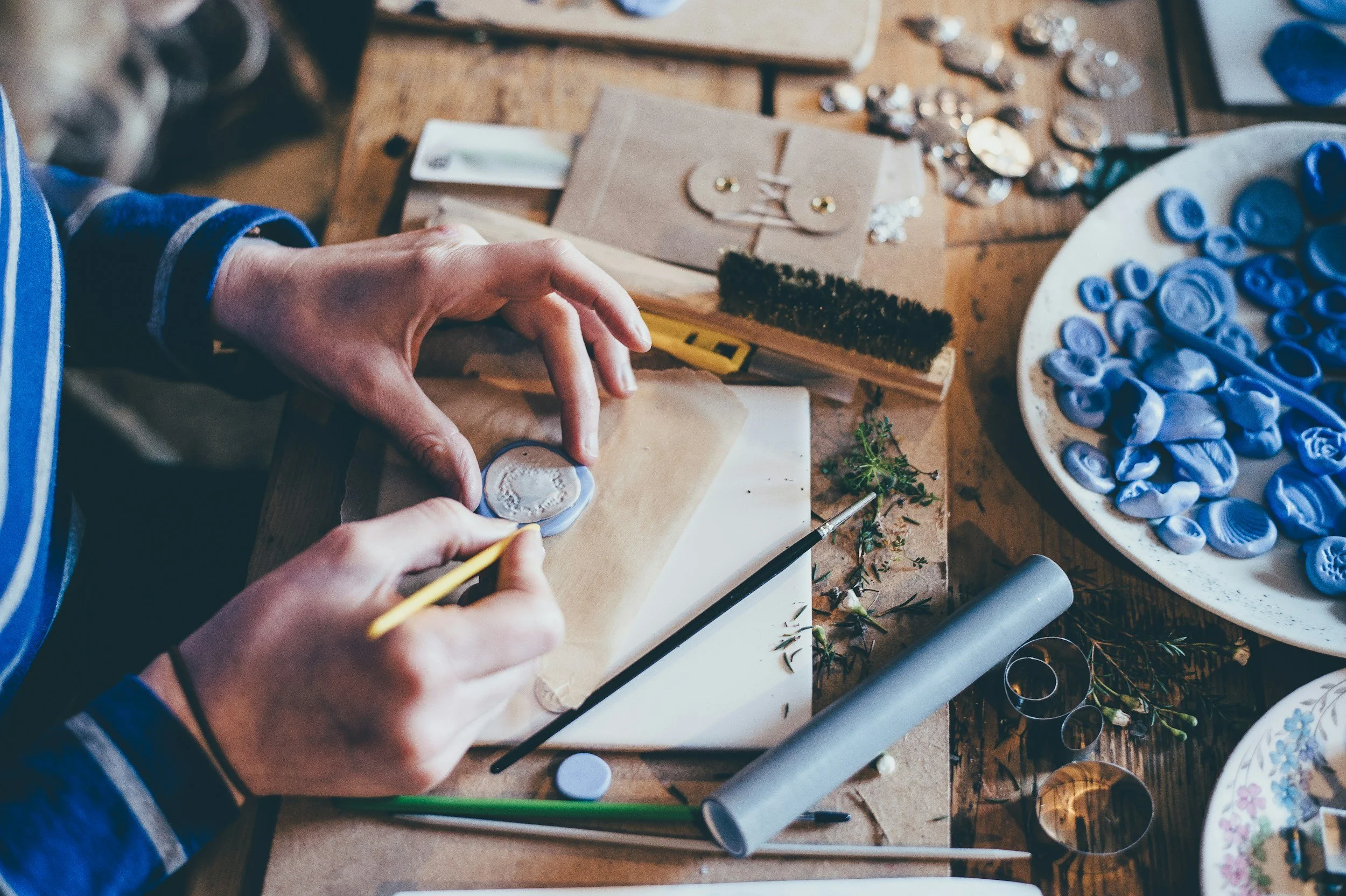
Relational Trauma-informed
Art Therapy
when words are not enough
You might be here because
something isn't quite working.
You carry anxiety like a second skin
It's exhausting to live in a body that's always bracing. You've tried to manage it, understand it, push through it. Maybe it's time to actually listen to it.
You’re experiencing burnout
When productivity became survival. When rest feels impossible. When you've forgotten what you actually enjoy or that you're allowed to.
Relationships leave you confused
The same patterns keep showing up. You're never quite met, or never quite sure how to meet yourself.
Your nervous system is stuck
in survival mode
Whether it's something that happened once or something that accumulated over years, your body remembers. You're looking for a space that understands that, and doesn't rush you through it.
You're navigating queerness
or non-monogamy
You need a space that doesn't require you to explain yourself, defend your identity, or edit your reality to make the room comfortable.
Talk therapy hasn't been enough
You've done the talking. You have the insights. But there's something that lives in the body, beyond what words can reach. The creative process opens another door.
What you carry isn’t yours alone. What looks like a problem to be fixed is often your body's most intelligent attempt to cope. We begin by getting curious about that, together.
You are not your symptoms.
You are the whole story.
Trauma-informed art psychotherapy for people navigating anxiety, burnout, relational wounds, queerness, and the quiet weight of being human, from an intersectional, feminist lens. I work in English, Spanish, and Swedish, with clients based in Spain, across Europe, and internationally, including English-speaking expats navigating life far from home.
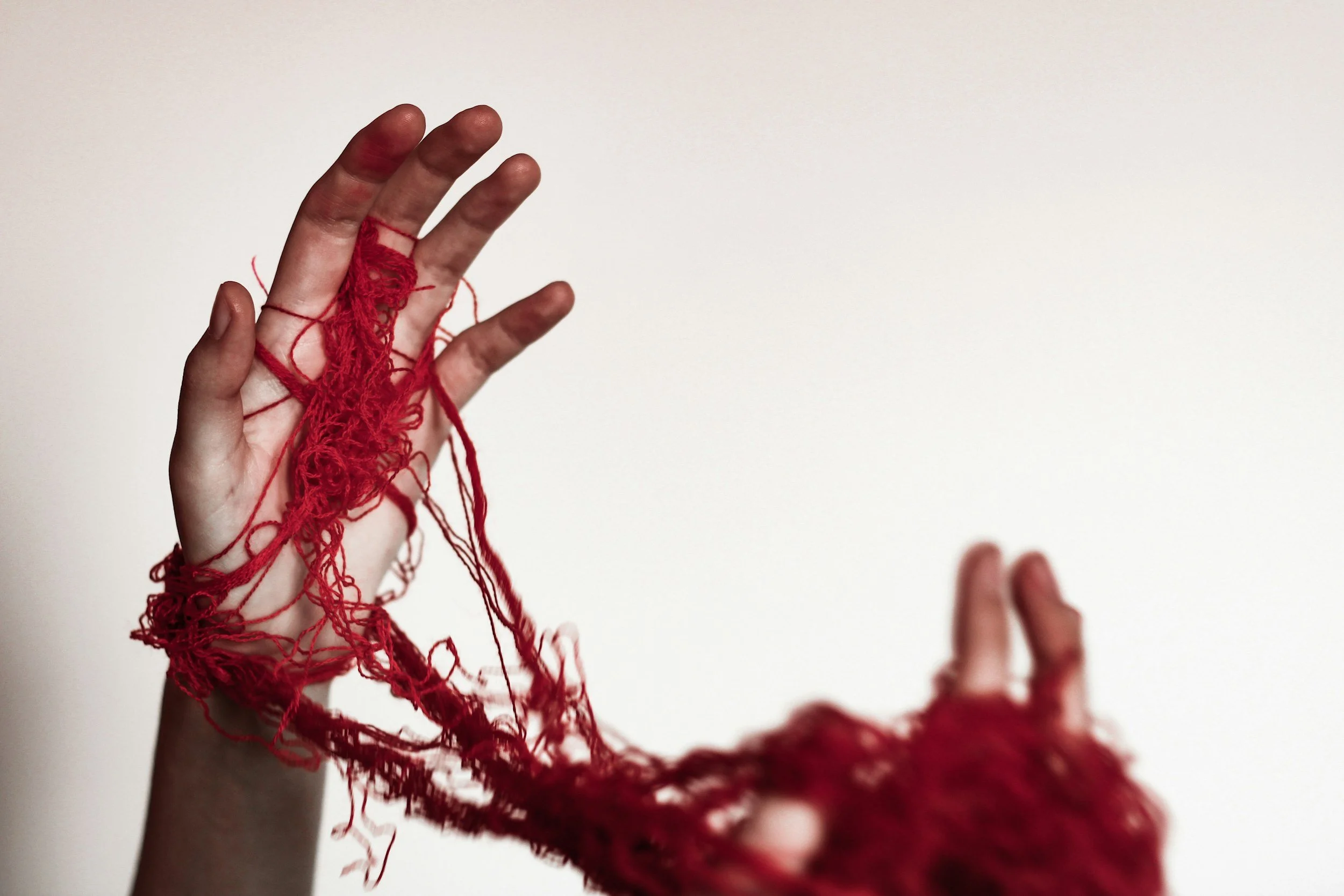
This is where art comes in. Bear with me.
You sit down. There's paper, maybe paint, maybe clay, whatever feels right that day. Nobody asks you to make something good. Nobody's marking it.
You start, often without much of a plan. Somewhere in the making, something shifts, a memory surfaces, a feeling gets heavier or lighter, a colour keeps appearing that you didn't choose on purpose. We notice that, together, with curiosity rather than analysis.
Sometimes we talk about what happened. Sometimes the making was the whole thing, and that's enough too.
This is art psychotherapy. It is talk therapy's quieter cousin. Instead of only using words, we also use material, colour, image, movement, to reach feelings and memories that words alone sometimes can't get to.
“The most powerful medication you can prescribe is the relationship.”
Credentials & Practice
Bachelor’s in Social Work
Postgraduate in Art Psychotherapy & Community Art
Master’s in Art Psychotherapy
Certification in Motivational Interviewing
Registered member of Association for Art Therapists
Active clinical supervision
About me
Relational, trauma-informed Art Therapy
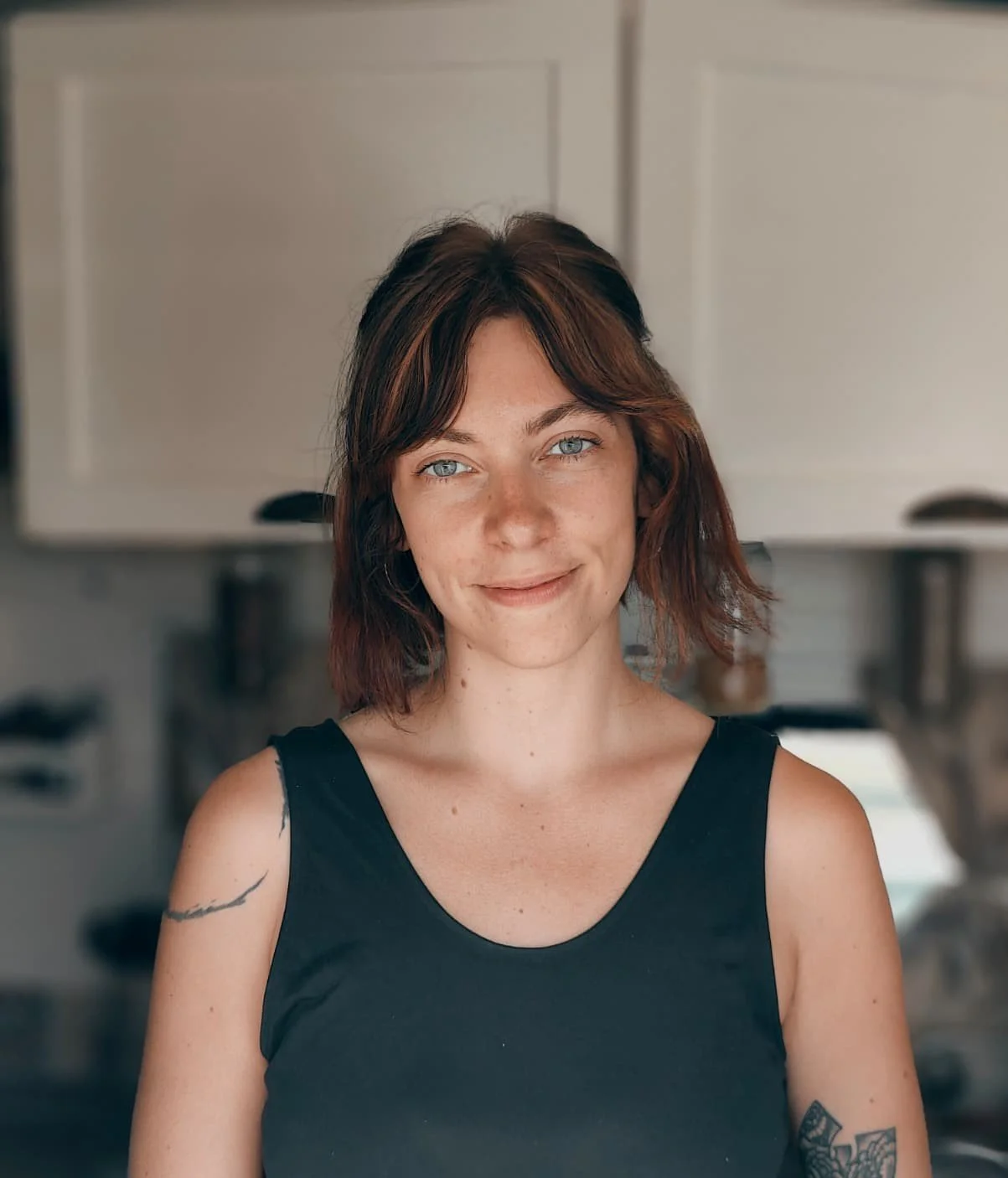
I’m Alexandra, and I'm here to stay curious with you. About what you're sitting with, where it lives in your body, and what it might be trying to say.
Originally from Greece, I now live and work in Cádiz, Spain, seeing clients online and in person, in English and Spanish.
My work is rooted in something simple but easy to forget: we are shaped by our relationships, from our very first ones. Those early blueprints don't disappear; they travel with us into every room, every relationship, every moment of conflict or closeness. Together we bring curiosity to them rather than judgement.
I work from a trauma-informed approach that understands how our history lives in the body and nervous system. Because not everything can be solved with words. Some things need to be felt, moved through, expressed. I trust the body to be part of that work as much as I trust language. Sometimes more.
No two people arrive carrying the same thing, so no two processes look the same. From that belief, I draw from approaches such as Motivational Interviewing (MI), Mentalization, attachment theory, psychodynamic-based therapy, breath, movement, art-making, writing, metaphors and play. What I bring is the willingness to follow what's actually alive in the room, and the training to know what to do when I find it.
Beyond any specific method, I believe what actually does the healing is the relationship we build together. I don't see people in isolation, I see them in the context of their histories, their relationships, and the systems they've had to navigate. Those systems matter. And they're worth questioning.
Outside the session room, I like moving my body, reading things that make me think differently, and get on with the ordinary, complicated business of being human.
WORK WITH ME
Two ways to be here,
depending on what you need.
1:1 Art Psychotherapy
A dedicated weekly space to slow down, go beneath the surface, and not be alone in what you find there. We work together to understand the root of what you're carrying, not just manage the symptoms.
Each session is grounded in relational psychodynamic psychotherapy, a method that has no fixed way of working but is adapted to each person’s needs. I draw from different approaches to find what feels most supportive for you. Held online, weekly.
60-minute weekly sessions, online
In English, Spanish, Swedish or Greek
No artistic skills needed, we focus on the process
Trauma-informed, somatic and relational approach
Intersectional, feminist and queer-affirming
Make Bad Art Membership
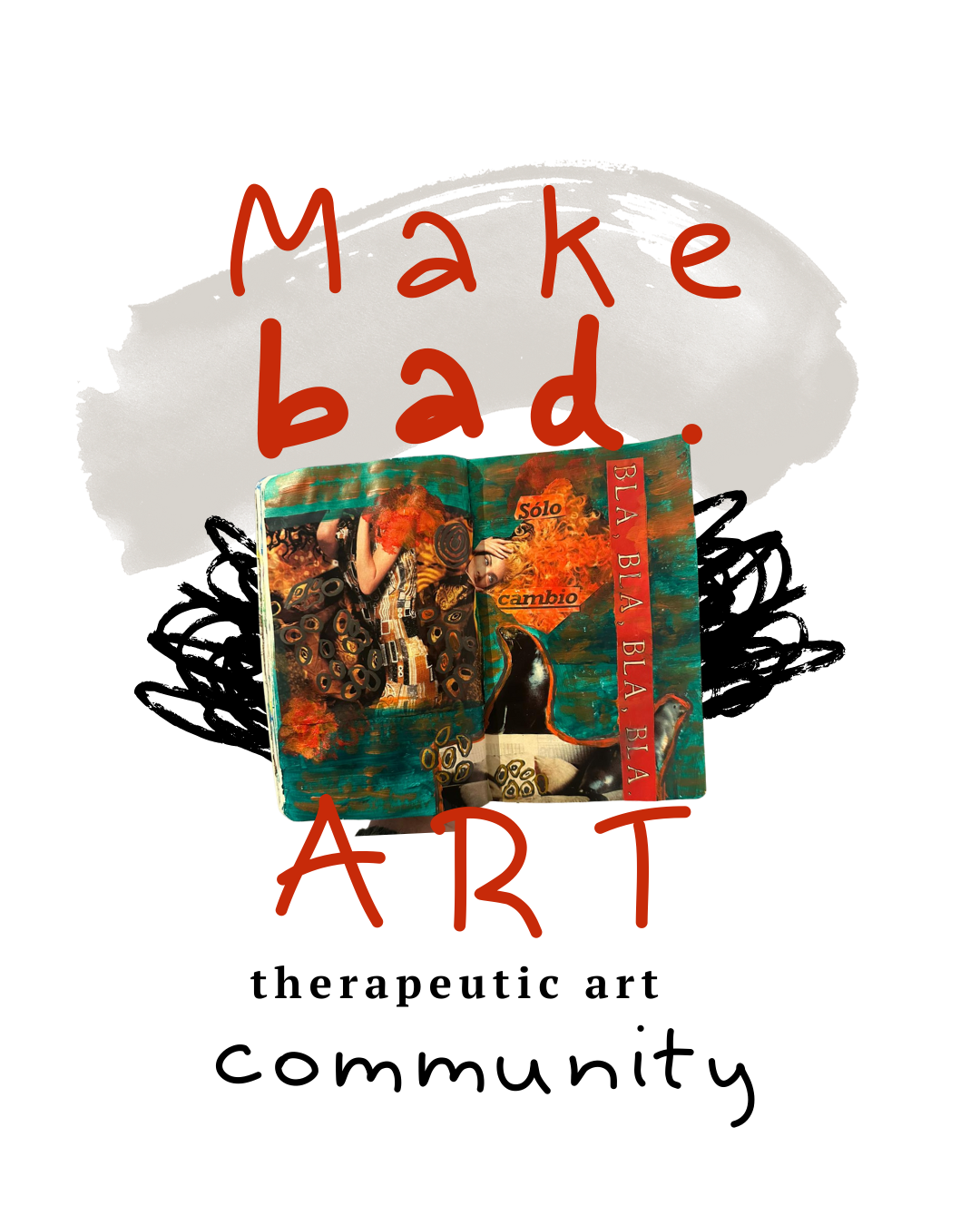
A non-clinical creative community where we actively confront perfectionism. We gather weekly to make (bad) art, regulate our nervous systems, and reflect.
Each week we explore a mental health theme such as boundaries, play, inner landscape, rest through gentle check-ins, creative warm-ups, and shared art-making time.
Weekly live sessions, Sundays 18:00–19:30 GMT+1
Access to the full library of recorded sessions
Permission to play, reflect and rest in a supportive community
Not art therapy but genuinely therapeutic
No art skills needed, with simple materials you have at home
-
It gives you access to parts of yourself that live below language. Many people find it helps them process what talk alone hasn't shifted, understand their own patterns more clearly, and build a different relationship with their body and nervous system.
Above all, it offers what any good therapy offers: a relationship where you're not alone with what you carry.
-
An art therapy session usually unfolds in three stages: meeting, creating, and sharing.
We begin by welcoming each other, giving space for you to share how you are and anything that feels important to bring into the session. Then comes the creation stage, a time for you to work with the art materials available. Finally, we move to sharing, where we reflect together and help you make sense of your experience.
That said, every session is unique and shaped by you. Sometimes there may be no creating at all, we might simply talk. Other times, you may create without feeling the need to share. Both are part of the process, and both are okay.
-
Yes, art therapy is possible even online. The main difference is that we meet through a video platform such as Teams, and you bring whatever art materials you have available with you.
-
The length of therapy is unique to each person and depends on your needs and goals. In the first three sessions, we focus on assessment, a space for you to share about yourself and what brought you here, to try the experience of art therapy, and for us to sense together whether we are a good fit.
After this initial period, we decide on the frequency of sessions based on what feels most helpful for you. Weekly sessions are often recommended at the start, as they help to build a trusting relationship and create continuity in the process. Over time, sessions can become less frequent, as you gain new insights, tools, and perspectives to carry with you.
-
Art therapy may be right for you if you are willing to engage in a psychotherapeutic process and wish to add another form of communication beyond words. Art therapy offers a space where the creative process can help express what language alone cannot. Because it is experiential, art therapy can sometimes help you access important insights more quickly.
-
No, though I understand why it might sound that way. There's no instruction, no technique to master, no "right" way to do it. You won't be taught how to draw or paint.
What we're doing is using the creative process as a way in, not as a skill to develop. The materials become a way to access what's happening beneath language, in the body, in sensation, in the things you reach for without quite knowing why. What matters isn't what you make. It's what emerges through making it, and what we do with that together.
You don't need any artistic ability or experience. You just need to be willing to try something different.
-
A friend can listen. Journaling can help you notice a pattern. But neither is trained to see what's happening beneath what you're saying, or to hold what comes up when something old and unprocessed surfaces. This is a relationship built specifically to go there, with someone who has the training to know what to do once you find it, and who isn't inside your life the way a friend is. The art-making adds another layer: it reaches things that don't arrive in words at all, things a conversation or a page in a journal might never touch.
-
The relationship at the centre is the same — that's what actually does the healing, in art therapy or any other kind. What's different is how we get there. Talk therapy works almost entirely through language. Here, we also work through image, material, movement, metaphor. Sometimes something can be shaped or expressed long before it can be said. The art-making doesn't replace the talking, it opens a door that words alone sometimes can't.
-
Anxiety often lives in the body before it ever becomes a thought. Art-making gives that a place to go that isn't just "think your way out of it."
It can help externalise what's happening internally, slow down a nervous system that's used to running fast, and create some distance between you and the anxiety so you can get curious about it rather than only being controlled by it.
-
It means we move at the pace your system can actually handle, not the pace your mind thinks it "should." It means understanding that trauma isn't just a memory, it's something that lives in the body and nervous system, and that reliving it isn't the goal.
You're never pushed to disclose more than feels right, and we pay close attention to safety, pacing, and what your body is telling us, alongside what you're saying.
-
Yes. This is an area I understand both personally and professionally. I've navigated it in my own life, and I've supported clients working through the specific questions, tensions, and joys that come with non-monogamous relationships.
You won't need to explain the basics or justify your relationship structure here. We can go straight to what's actually going on for you.
-
No. The art is a tool, not a requirement. Some sessions are mostly conversation; others move into image, material, or movement.
We follow what's actually alive for you in that moment. Sometimes that's making something, sometimes it's talking it through, sometimes it's a mix.
-
Honestly, you might not know until we've spoken. That's exactly what the free intro call is for, a chance to get a feel for how I work, ask anything you're unsure about, and notice how it feels to be in a conversation with me.
Fit matters more than almost anything else in this work, so take the space to check for it.
-
That's a completely normal place to start from. Research consistently shows that what makes therapy work isn't mainly the specific method, it's the relationship between you and your therapist.
So it matters less that you arrive knowing exactly what you need, and more that you feel comfortable enough to say what's true for you as we go. From there, I'll do my best to adapt, in approach, in pace, in what we focus on, to what actually fits you.
You don't need to know where to start.That's what the first conversation is for.
I offer a free 30-minute introductory call so we can meet, you can ask questions, and we can see if working together feels right.